
The focus on young people when it comes to start ups has been a constant source of frustration to me, since setting up my business. There’s no doubt they need help, support and investment to get their ideas off the ground and good luck to them – I applaud anyone with the guts to give it go – whatever age. But turning up at yet another support group/event to find I was the only person over 40, was so alienating, eventually I stopped going.
I had 30 years experience and a wealth of contacts, but there were (and still are) all sorts of new and unexpected obstacles to overcome. In the early days – when I was the office cleaner, IT person, accountant and content provider, I often felt overwhelmed and having a group of like-minded people to talk to, would have been incredibly helpful.
Becoming invisible as we age is a growing problem particularly in the workplace and it’s something many of my friends have encountered. They have found after years of working in a particular industry, they are overlooked when it comes to promotion and find it increasingly hard to even get interviews for new jobs. This is leading to many of them – like me – to re-consider their future. Starting a business in middle age is daunting but also exciting and it seems we are good at it. Take a look at this feature in today’s Telegraph…………
‘When Jane Kellock proposed an idea for a new business to her male boss and an investor, their response was disappointing. “They said, ‘I like this bit but I don’t like that bit,’” she recalls. “They were quite disparaging.”
But Kellock, 56, who had spent her career working as a trend forecaster in the fashion industry, did not stay demoralised for long. “I came away from the meeting thinking ‘screw you, I can do this myself,’” she recalls.
And so, at the age of 51, she decided to set up her own enterprise: a business-to-business website called Unique Style Platform (USP) that provides a forecasting service for the fashion and lifestyle industries. Almost five years on, she has around five women working for her on a regular basis at her office in Hackney, east London, and a huge team of freelancers as her company continues to grow.
Kellock is one of numerous success stories among the often-overlooked demographic of over-50s who set up their own businesses – a group that reportedly accounts for one in six new businesses started in the UK. Known as ‘olderpreneurs,’ their hit rates are impressive: research suggests that businesses started by older people tend to have a 70 per cent chance of making it through the first five years, whereas among businesses started by younger entrepreneurs, the figure is only 28 per cent.
Although older women have traditionally lagged behind older men in business creation, there are signs that increasing numbers of women in midlife and beyond are deciding, for a multitude of reasons, to give it a go.
“We’re seeing a lot of women who are starting up businesses in their mid-40s to early-50s,” says Lynne Cadenhead, chairman of Women’s Enterprise Scotland. “It is a genuine trend.”
So what lies behind this increase in female-led “silver start-ups”? And how are older female entrepreneurs benefiting from the so-called age advantage?
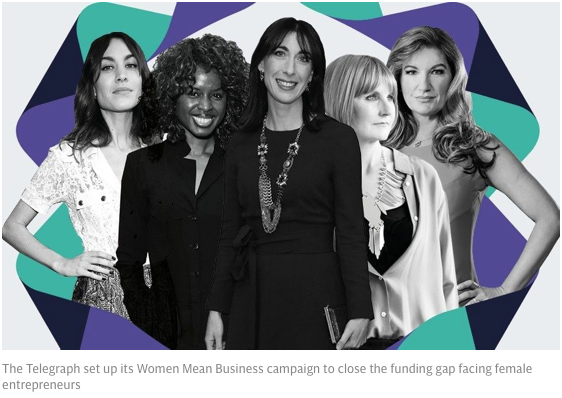
One answer can be found in research conducted by The Telegraph before the launch last week of our Women Mean Business campaign to close the funding gap facing female entrepreneurs. As part of this, we commissioned a poll of 750 female business owners, among the findings of which was that women with children were the most likely to say they felt they were not an equal footing with male founders when starting out. Interestingly though, those with adult children who had left home not only said they felt this less than those whose children still lived at home, but less even than those who had no children (just under 25% of those with adult children felt it applied to them, compared to just under 35% of childless female entrepreneurs).
“Throughout my children’s childhood I was freelancing part-time and juggling lots of thing to fit in around them,” she says. Once she no longer had to do so, her options broadened as the hours she could devote to work increased. “We can’t pretend it’s not difficult to raise children and work,” she says. “Now my children have left home all my energy can be diverted to working. I feel I can work 14-hour days now and don’t feel guilty anymore. I’ve also got an amazing amount of contacts and am very well connected, and I’ve [built up] the knowledge [during my career].”
Friends in the same position who have “got the child-rearing part of their lives out of the way” are now keen to start their own businesses too, she adds.
Others take the plunge even later in life, depending on their own personal circumstances, but the frequent refrain is that the time was finally right for them.
Cherry Harkerlaunched her swimwear business, ZwimZuit, in 2016 at the age of 76. She has told the Telegraph previously: “It seemed like the perfect time: I married when I was 30, then spent my 30s and 40s focused on family life, supporting my husband, John, in his business and raising our daughter, Tamarisk. I’d battled breast cancer in my 50s, cervical cancer in my 60s, so now I finally had time to do something that was just for me. I don’t see my age as a barrier.”
Not only might the time be right once women are relieved of their childcare responsibilities, it’s also the case that those who have spent many years juggling caring responsibilities with work may feel well-placed to take on the challenge of starting their own companies. After all, if you’ve managed to hold down paid employment for two decades or more while handling the myriad tasks involved in parenting and running a household (the bulk of which still typically fall to women), anything feels possible.
Friends in the same position who have “got the child-rearing part of their lives out of the way” are now keen to start their own businesses too, she adds.
Others take the plunge even later in life, depending on their own personal circumstances, but the frequent refrain is that the time was finally right for them.
Cherry Harkerlaunched her swimwear business, ZwimZuit, in 2016 at the age of 76. She has told the Telegraph previously: “It seemed like the perfect time: I married when I was 30, then spent my 30s and 40s focused on family life, supporting my husband, John, in his business and raising our daughter, Tamarisk. I’d battled breast cancer in my 50s, cervical cancer in my 60s, so now I finally had time to do something that was just for me. I don’t see my age as a barrier.”
Not only might the time be right once women are relieved of their childcare responsibilities, it’s also the case that those who have spent many years juggling caring responsibilities with work may feel well-placed to take on the challenge of starting their own companies. After all, if you’ve managed to hold down paid employment for two decades or more while handling the myriad tasks involved in parenting and running a household (the bulk of which still typically fall to women), anything feels possible.
“Women bring a different life experience to business,” is how Cadenhead puts it. “[They] always have multiple roles in society: they’ll be wives, carers, mothers.They’re much more used to [juggling things] and more comfortable doing it.”
Elsewhere the report, which was written by Isabella Moore, a former chair of the Women’s Enterprise Panel, noted: “Setting up in business is an opportunity for many older women to develop a long-held ambition or fulfil a need for recognition and status.”
Increasing life expectancy may also come into play. Many of today’s 50-somethings have decades of good health ahead of them and, as Moore’s report says, “Good physical and mental health is an important factor for women thinking of setting up their own business, who consider it a prerequisite for such entrepreneurial activity.”
Greater life expectancy also means women are often in midlife or older before they lose their parents. Inheriting money at this age could provide not only the impetus but the means to put their long-held dreams of entrepreneurship into action.
On the flipside, Moore’s research suggests necessity is as likely to be the mother of female entrepreneurship as desire, and her report refers to a breed of older women she calls reluctant entrepreneurs: “Older women are likely to choose entrepreneurship, despite it being a non-stereotypical activity, because of necessity when other more conventional paths are blocked because of job dissatisfaction or discrimination,” the report says. In the same vein, “Inadequate or non-existent pension provision can be the driver which prompts older women to explore an entrepreneurial venture, so as to boost their income.”
As Bill Gates once said, “self-confidence is primary and then finding your passion is an adventure.” For some women over 50, this has never resonated more”.
To find out more about the Telegraph’s Women Mean Business campaign visit telegraph.co.uk/women/business /



Thank you for sharing this. As a 56 entrepreneur myself, it is so good to read that I am not alone! Some days feel like I am chewing ground glass looking down an abyss, but most days I am so happy I am following a passion and going on my adventure. I feel so lucky to be able to do what I am doing.
If we talk about investment, then now is the time to think about investing money in cryptocurrency. After all, based on the latest rates, the price of the crypt begins to grow. I advise you to buy crypto at Switchere.com. This exchanger is licensed and very convenient. You simply indicate what you want to receive in exchange for fiat money or another type of cryptocurrency.
It’s great to see a discussion on the success of olderpreneurs! As someone interested in the evolving landscape of entrepreneurship, I find the insights on older individuals leveraging their experience and networks to build successful businesses particularly inspiring. In this context, I noticed a recommendation for https://icoholder.com/en/defi. This platform offers valuable resources for those exploring decentralized finance opportunities, which could be beneficial for olderpreneurs looking to diversify their investment portfolios or integrate blockchain technology into their business strategies.
As someone from a finance background, I’ve always been skeptical of automated trading systems. However, once I gave trading bots a try, I was hooked. They work tirelessly around the clock, maximizing profits and reducing losses based on predefined strategies. I’ve used a few platforms, but aceecommservices.com has truly stood out in terms of functionality and ease of use. Their platform integrates seamlessly with different exchanges and provides unique tools that allow me to monitor market trends in real-time. It’s impressive how they make it accessible for traders of all levels, not just the pros. Honestly, trading bots have taken so much of the stress off my shoulders. My bot runs day and night, grabbing opportunities while I focus on other important tasks If you’re interested in crypto trading but don’t want to stay glued to the screen, then aceecommservices.com is a great place to start. It simplifies everything, and their support is top-notch. Take a look at their site https://aceecommservices.com and see how they can help you maximize your profits.
Games that involve memorization GeoGuessr Free pattern recognition, and quick reactions can significantly improve memory and attention span.
I love how World Guesser challenges my knowledge of landscapes, architecture, and even tiny details like road signs. Every game is a new learning experience!
That’s true. I can’t deny these facts io games
Color Block Jam Online: Enjoy 1160 levels of exciting puzzle challenges!
Starting a business later in life can be both empowering and practical. Women over 50 bring a wealth of experience, resilience, and drive—often turning midlife into the perfect time to launch something new. Age isn’t a barrier; it’s an advantage.
I can definitely relate to the frustration of feeling out of place in younger-dominated startup spaces. It’s encouraging to see the unique perspective that olderpreneurs bring to the table. Our experiences and resilience really give us an edge. Speaking of which, I recently stumbled upon a game called kirka.io unblocked, and it got me thinking about how the gaming world, too, benefits from diverse age groups. It’s amazing how many opportunities exist in unexpected areas!
I recently stumbled upon a game called kirka.io unblocked, and it got me thinking about how the gaming world, too, benefits from diverse age groups. It’s amazing how many opportunities exist in unexpected areas the baby in yellow free!
The idea that age leads to “invisibility” in the professional world is such a painful irony, especially when that invisibility is actually a mask for decades of accumulated expertise. It’s frustrating how the startup ecosystem tends to fetishize the “young disruptor” narrative, often overlooking the fact that seasoned professionals already possess the emotional intelligence and crisis management skills that younger founders are still struggling to develop. I’ve found that while the technical hurdles—like learning new software or navigating digital marketing—can feel overwhelming initially, the strategic foundation we bring to the table is something that can’t be taught in a bootcamp. I actually dealt with a similar feeling of being an outsider when I started building KCD2Quest, where I had to bridge the gap between deep, technical knowledge and the rapidly shifting landscape of digital content. We shouldn’t have to stop attending networking events just because we aren’t in our twenties; our presence in those rooms is exactly what provides the balance and perspective that the industry desperately needs.
The point you made about feeling “invisible” as we age in the professional world really hits home. It is frustrating because, while younger founders might have the raw energy, they often lack the emotional intelligence and the deep network of contacts that come from decades of navigating different workplace dynamics. I’ve found that the “unexpected obstacles” you mentioned—like suddenly having to master every single technical role from IT to accounting—can be much harder to manage when you aren’t surrounded by a peer group that understands your specific stage of life. I actually looked into how different age demographics approach digital tools and resource management on OrbitDash and noticed that while the learning curve exists, the strategic application of those tools is much more disciplined in older entrepreneurs. We aren’t just playing with new tech; we are applying it to solve real, long-standing problems. We need more spaces specifically designed for this demographic so we don’t feel like outliers in a room full of twenty-somethings.
The feeling of being “invisible” in professional spaces is something I’ve noticed more and more as I’ve navigated different industries. It is incredibly frustrating when the startup culture seems to equate youth with innovation, completely overlooking the massive advantage that decades of experience provide. While younger founders might have the energy, they often lack the emotional intelligence and the deep network of contacts that “olderpreneurs” bring to the table from day one.
I remember those early days of wearing every single hat—from tech support to marketing—and feeling like I was constantly playing catch-up with new tools. I actually dealt with a similar learning curve when I started implementing new tech workflows at VirtualStagingAI, realizing that while the tools change, the fundamental business logic remains the same. We aren’t just starting from scratch; we are starting from experience. I really hope more support groups start recognizing that a wealth of industry knowledge is just as valuable as a fresh, albeit unproven, idea.
The idea of becoming “invisible” as we age is such a stinging reality, especially when you’ve spent decades building a toolkit of skills that younger founders simply haven’t had the time to acquire yet. I was particularly struck by your mention of having to be the “office cleaner, IT person, and accountant” all at once. That juggling act is exhausting, and it’s frustrating that the startup ecosystem often mistakes youthful energy for actual competence. Experience provides a level of emotional resilience and strategic foresight that you just can’t teach in a bootcamp.
I’ve noticed that while we might lack the “tech-native” label, our ability to navigate complex professional relationships is our secret weapon. I’ve actually experimented with using different digital tools to bridge that gap—for instance, I’ve seen how people use roomflip.pro to quickly visualize professional studio spaces without needing a massive design budget—and it’s all about leveraging new tech to amplify our existing expertise. We don’t need to be 22 to be innovators; we just need a community that recognizes the value of our perspective.
The point you made about feeling “invisible” as we age really resonates, especially when you mentioned how the startup culture seems almost exclusively designed for the under-30 crowd. It’s frustrating because, as you noted, that 30 years of experience isn’t just a number—it’s a massive toolkit of crisis management and networking that younger founders are still trying to build. I’ve noticed that while younger entrepreneurs have high energy, they often lack the emotional resilience that comes from having navigated previous market cycles or professional setbacks.
I actually see a similar dynamic in digital communities where people underestimate the value of seasoned players who understand long-term strategy over quick gains. I’ve seen this play out when discussing high-stakes value exchanges on Blox Fruits Trading, where users often mistake temporary hype for actual stability. Just like in business, having a foundational understanding of “value” versus “trend” is what separates those who succeed from those who burn out. We shouldn’t be sidelined just because we aren’t part of the “new kid on the block” demographic.
The feeling of being “invisible” in professional spaces is something that resonates deeply, especially when you realize that your decades of accumulated wisdom are often sidelined in favor of the “disruptor” energy typically associated with twenty-somethings. You touched on a vital point regarding the isolation of being the only person over 40 in a room; that lack of peer support can make the transition from employee to entrepreneur feel much more daunting than it actually is. While young founders might have the energy, they often lack the crisis management skills and the deep network of contacts that you mentioned. I’ve found that navigating these new digital landscapes requires a specific kind of resilience. I actually explored how to build community and find niche spaces through lily lovebraids and realized that finding your specific “tribe” is the only way to combat that sense of alienation. We shouldn’t have to stop attending events just because we don’t fit the stereotypical startup mold. Our experience isn’t a liability; it’s our greatest competitive advantage.
The idea that being the only person over 40 in a room can lead to total alienation is something I think many experienced professionals feel but rarely voice. You touched on a vital point regarding the “invisible” nature of aging in the workplace; there is a massive misconception that innovation belongs exclusively to the youth, when in reality, our decades of accumulated “soft skills” and crisis management are what actually keep a business afloat.
I’ve found that while the technical hurdles—like being your own IT person—can be daunting, the real advantage of being an “olderpreneur” is the ability to navigate complex networks and maintain composure under pressure. I actually deal with a lot of data management and strategic planning through the Borderlands 4 toolkit community, and it’s clear that having a deep, historical understanding of a system is often more valuable than just having raw, unrefined energy. We aren’t just starting from scratch; we are starting from experience, and that should be viewed as a competitive asset rather than a liability.
The point you made about the “invisibility” that comes with age in the professional world really hits home. It is a strange paradox where we possess the most refined skill sets and the deepest networks, yet the startup ecosystem seems obsessed with the “young prodigy” narrative. I’ve definitely felt that alienation when walking into networking events and realizing the energy is geared entirely toward twenty-somethings who are still figuring out how to balance a checkbook, let alone run a company.
Having decades of experience provides a level of emotional resilience that younger founders often lack; we’ve already survived several market cycles and professional crises. While I’ve had to teach myself the technical side of things—like managing digital assets and design—I feel much more equipped to handle the mental toll of entrepreneurship. I actually experimented with using myink ai to help streamline some of my creative brainstorming and design workflows recently, and it reminded me that while the tools change, the strategic wisdom we bring to the table remains our biggest competitive advantage. We shouldn’t just be included in these support groups; we should be leading them.
The frustration of feeling alienated at startup events, especially having accumulated 30 years of experience and contacts, really resonates. It’s baffling how the narrative so often centers on youth, overlooking the immense value older individuals bring. I found a similar perspective on AnyPassportPhoto that complements this well – the idea that practical knowledge and established networks can be just as crucial, if not more so, than youthful exuberance. It’s a shame that invisibility often creeps in with age, not just in employment but also in entrepreneurial spaces. A dedicated support system for “olderpreneurs” would indeed be invaluable, offering a space to navigate those unexpected obstacles and share the unique challenges and triumphs of launching a business later in life.
It’s so refreshing to read about the “olderpreneur” experience, as I can definitely relate to feeling overlooked at business events. The constant focus on youth in the startup world meant I often felt out of place, despite my years of industry experience and existing network. You hit the nail on the head about the sheer volume of tasks falling on one person in the early stages – feeling overwhelmed was a daily occurrence, and a peer support group would have been invaluable. It’s a shame that invisibility that can creep in with age extends to the business world too. I’ve seen friends face similar challenges with career progression after decades in their fields. It makes me wonder if there are platforms or communities that specifically cater to seasoned entrepreneurs, perhaps offering tailored advice on navigating these unique hurdles. I remember stumbling across a resource for image editing that seemed to understand the need for specialized tools, much like we need specialized support in business – it was called AI Image Extender, and it made me think how much easier things could be if those resources were mirrored for more mature business owners.
It’s so validating to read about the “olderpreneur” experience. I completely understand the frustration of being the only one over 40 at startup events; it definitely makes you feel like an outsider, even with decades of experience. The isolation you describe, especially when you’re juggling so many roles in the early days, really resonates. It makes me wonder if there’s a gap in how support systems are structured, often overlooking the invaluable network and practical skills seasoned professionals bring. I’ve found some interesting discussions about leveraging existing skills in new ventures, and it’s something I’ve been exploring myself, even dabbling with tools like AI Image Extender to help with visual content for my own projects. The point about invisibility with age is particularly poignant – it’s a shame that experience isn’t always seen as the asset it truly is.
It’s so validating to read your experience with startup support groups. I’ve felt that same frustration, showing up to events geared towards younger entrepreneurs when I had decades of professional experience under my belt. It can be incredibly isolating, and the feeling of invisibility as we age is a very real concern, not just in business but across many aspects of life. I often wonder if there’s a better way to leverage the skills and networks of experienced individuals rather than constantly focusing on the “next big thing” from fresh faces. For those looking to add a creative touch to their ventures, I found a similar perspective on ai colorpage that complements this well, offering simple visual tools that can be surprisingly effective.
It really resonates with me that you felt alienated at those young-focused startup events. I’ve encountered a similar dynamic when looking for resources, and it’s frustrating to feel like your experience isn’t valued because you don’t fit the “startup founder” mold. Thirty years of experience and a solid network are huge assets that often get overlooked. It makes me think about how much more effective support systems could be if they truly embraced a wider age range. I found a similar perspective on Borderlands 4 toolkit that complements this well, discussing how diverse perspectives often lead to better outcomes. The invisibility problem you mention is also a significant concern; it’s a shame that valuable skills and knowledge are so easily dismissed with age.
Your point about the frustrating lack of representation for older entrepreneurs at startup events really resonated with me. It’s disheartening to feel like the narrative is so heavily skewed towards the young, even when you bring decades of experience and a robust network to the table. I experienced something similar when I was launching my own venture; the feeling of being an outsider in rooms full of much younger founders was palpable. It’s true, the challenges are different, and the feeling of invisibility as we age seems to be a pervasive issue across many fields, not just entrepreneurship. Having a community of peers who understand those unique hurdles would be invaluable. I often think about how much easier it might have been to navigate the early days of building a business if there were dedicated resources, maybe even something that leveraged technology to connect experienced founders, rather than just focusing on the next generation. I recently came across HeadshotAI and while it’s focused on professional branding, the underlying idea of using tech to empower individuals, regardless of age, feels like a step in the right direction for broader visibility.
It’s so validating to read about the “olderpreneur” experience, especially the frustration of feeling overlooked at startup events. I completely relate to showing up and being the only one over 40; it can be incredibly isolating when you have decades of experience and a network that younger entrepreneurs might not yet possess. The author’s point about being the cleaner, IT person, and accountant all at once rings true – that initial hustle is real, and having a peer group would have been a lifesaver. It makes me wonder if there are specific resources tailored for this demographic. I found a similar perspective on Borderlands 4 toolkit that complements this well, highlighting how accumulated knowledge can be a significant advantage. The invisibility aspect as we age is also a huge concern, and it’s disheartening that it spills over into the entrepreneurial world.
Your point about the frustration of being the only one over 40 at startup events really resonated with me. It’s so true that the narrative often centers on young innovators, overlooking the immense value and experience older entrepreneurs bring. After decades in a field, you’ve not only built a deep well of knowledge but also crucial networks that can be game-changers for a new venture. I found a similar perspective on Horizon 6 Guide that complements this well, discussing how accumulated experience can translate into a more strategic approach to challenges. It feels like there’s a whole untapped demographic with so much to offer, yet they’re often left out of the spotlight.
The constant emphasis on young entrepreneurs is such a missed opportunity! I completely relate to feeling alienated at support groups; it’s like there’s an unspoken assumption that innovation only happens in a youthful brain. Your point about the “invisibility” older people face resonates too – I’ve seen friends with decades of expertise get sidelined. It’s a shame because that lived experience and existing network you mentioned are invaluable assets. It makes me think about how important it is to have spaces where *all* entrepreneurs, regardless of age, can connect and share those unexpected obstacles. I was just reading about some interesting projects that focus on building unique digital experiences, and it got me thinking about how even something as seemingly simple as a game can involve a lot of strategic thinking and problem-solving, much like starting a business. It’s all about finding creative solutions, isn’t it?